
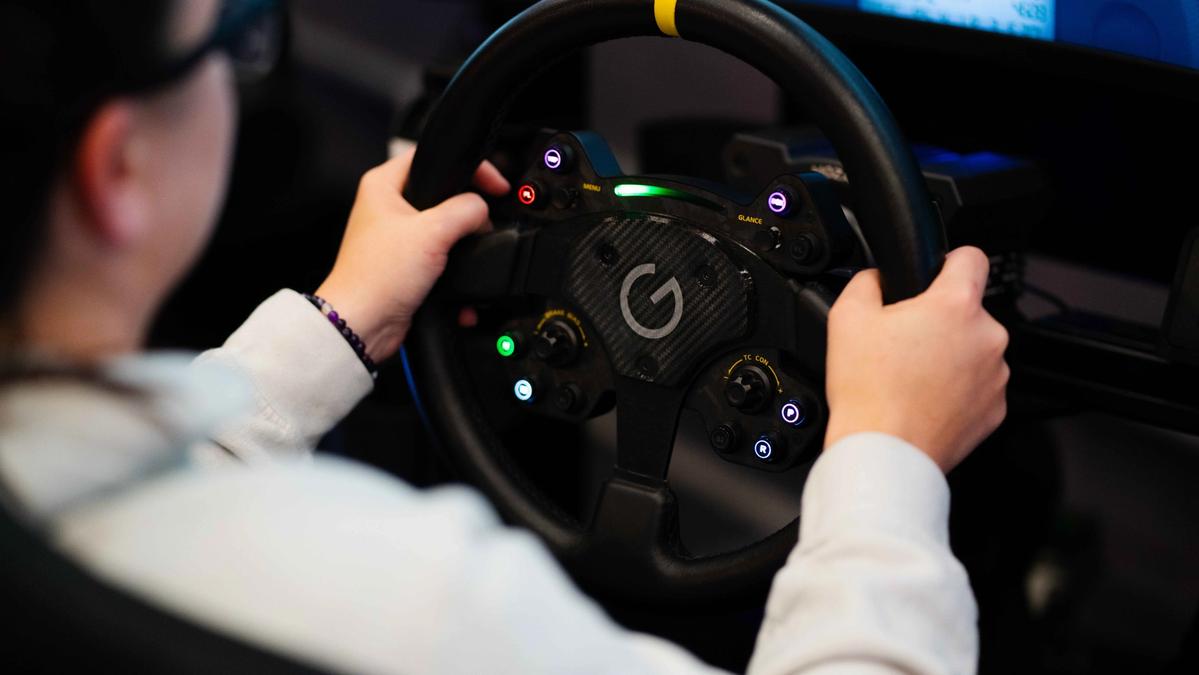
It Didn’t Start as Anything More Than a Game
I’ve got three kids, and like most parents, I’ve spent more time than I’d like to admit thinking about how much of their day involves a screen. It’s not something you can really avoid anymore. School uses it, their friends use it, everything seems to run through it. You try to set boundaries where you can, but at some point you accept that it’s just part of how they grow up now. So when sim racing first came into the picture a few years ago, I didn’t see it as anything different. All three of them were exposed to it at the same time. Same rigs, same space, same opportunity to sit down and try it. If anything, I probably justified it as a slightly better version of what they were already doing. Still a screen. Still a game. Just with a steering wheel attached.
What I didn’t expect was how differently it would actually play out. At the time, my 12-year-old was around 10 and jumped into it right away, approaching it with the kind of energy you’d expect at that age. My 15-year-old took a more measured approach, trying to understand it before really committing to it, while my youngest was mostly just curious and taking it all in. Same starting point, completely different ways of approaching it, and somewhere in watching all three of them interact with it, I started to realize this didn’t behave like the rest of their screen time.
The Moment It Stops Feeling Like a Game
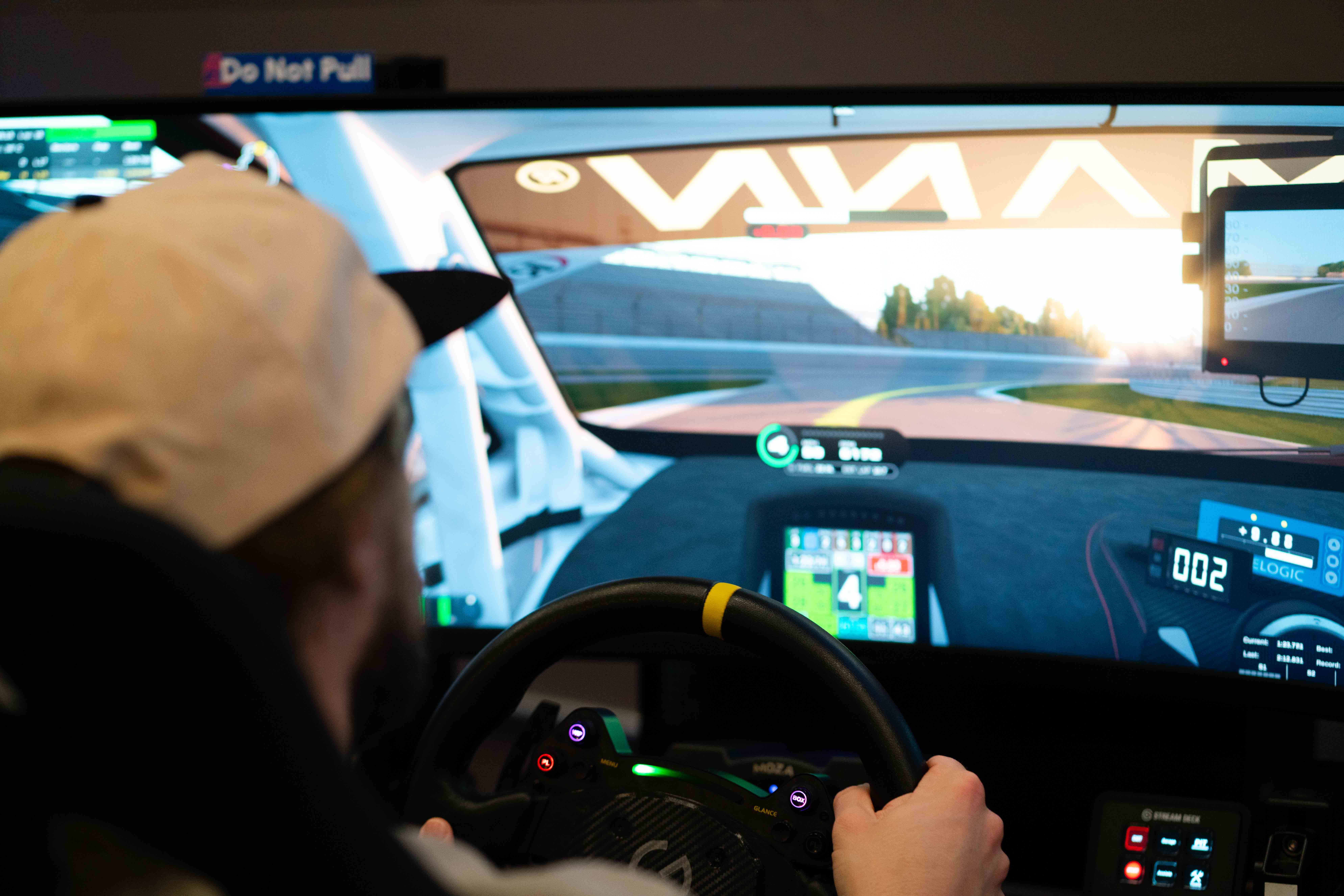
If you’ve never seen it up close, it’s easy to assume what happens next. A teen sits down, grabs the wheel, and starts driving, and whether they’re good at it or not, it just fills time like everything else. But that’s not really how it goes. The first few minutes usually look rough in a way that immediately grabs their attention. The car moves faster than expected, corners come up quicker than they think they should, and the inputs they make don’t produce the results they were expecting. They miss braking points, run wide, sometimes spin, and it interrupts the idea that this is something they can casually drift through.
What’s interesting is that instead of checking out, they lean in. Not physically, but mentally. The distractions that usually exist just don’t fit anymore because the experience won’t allow it. If they don’t focus, nothing works the way they want it to, so without anyone telling them to, they start paying attention in a way that’s hard to replicate anywhere else. You can see it happen from a distance. The posture changes, the grip on the wheel tightens slightly, and for maybe the first time all day, they’re fully locked into one thing without being asked to be.
When Effort Starts to Show Up in the Outcome
As they spend more time in the seat, something begins to click, but not in a sudden or obvious way. It shows up in small adjustments that start to make a difference. They begin to realize that braking a little earlier changes how the car behaves through a corner, that turning in just slightly too late creates problems they can’t fix on exit, and that rushing things usually makes everything worse. No one is walking them through it step by step. They’re learning it by feeling the difference between what works and what doesn’t.
That’s where the experience separates itself from most other forms of entertainment. The connection between effort and outcome becomes immediate and clear. If they focus, things improve. If they don’t, they don’t. There’s no way to fake progress or shortcut the process, and once they recognize that, they start chasing it. Not because someone told them they should, but because they’ve seen firsthand that it actually leads somewhere.
Decisions That Don’t Wait for You to Be Ready
Eventually, another car shows up on track, and the experience changes again. Now it isn’t just about controlling the car, it’s about reacting to something else that isn’t predictable. Someone is ahead of them or right behind them, and a decision has to be made in real time. Do they push forward or hold position? Do they defend or give space? Do they commit to a move or back out?
There’s no pause button, no time to step back and think it through. Whatever decision they make, they make it while everything is still moving. Sometimes it works, sometimes it doesn’t, but either way, the result is immediate and impossible to ignore. Over time, they begin to recognize a pattern. When they rush or react emotionally, things tend to fall apart. When they stay controlled, even when the pressure builds, things usually go better. It’s not something they’re told, it’s something they experience enough times that it becomes part of how they approach the next situation.
Learning What to Do After Something Goes Wrong
At some point, they make a mistake that costs them. They push a little too hard, lose control for a moment, and suddenly whatever progress they had made is gone. It’s a small moment on the surface, but it’s one of the most important parts of the experience. In most environments, especially ones involving screens, there’s an easy way out. Restart, quit, move on to something else. Here, those options don’t really fit the situation.
Instead, they reset themselves, bring the car back under control, and continue. The next lap isn’t perfect, but it’s more aware. They adjust without needing to be told what to fix because they’ve already felt what went wrong. Over time, that process repeats enough that mistakes stop feeling like an endpoint and start feeling like part of how they improve. That shift, from reacting to adjusting, is where you start to see something more than just a game taking place.
Watching It Play Out With My Own Kids
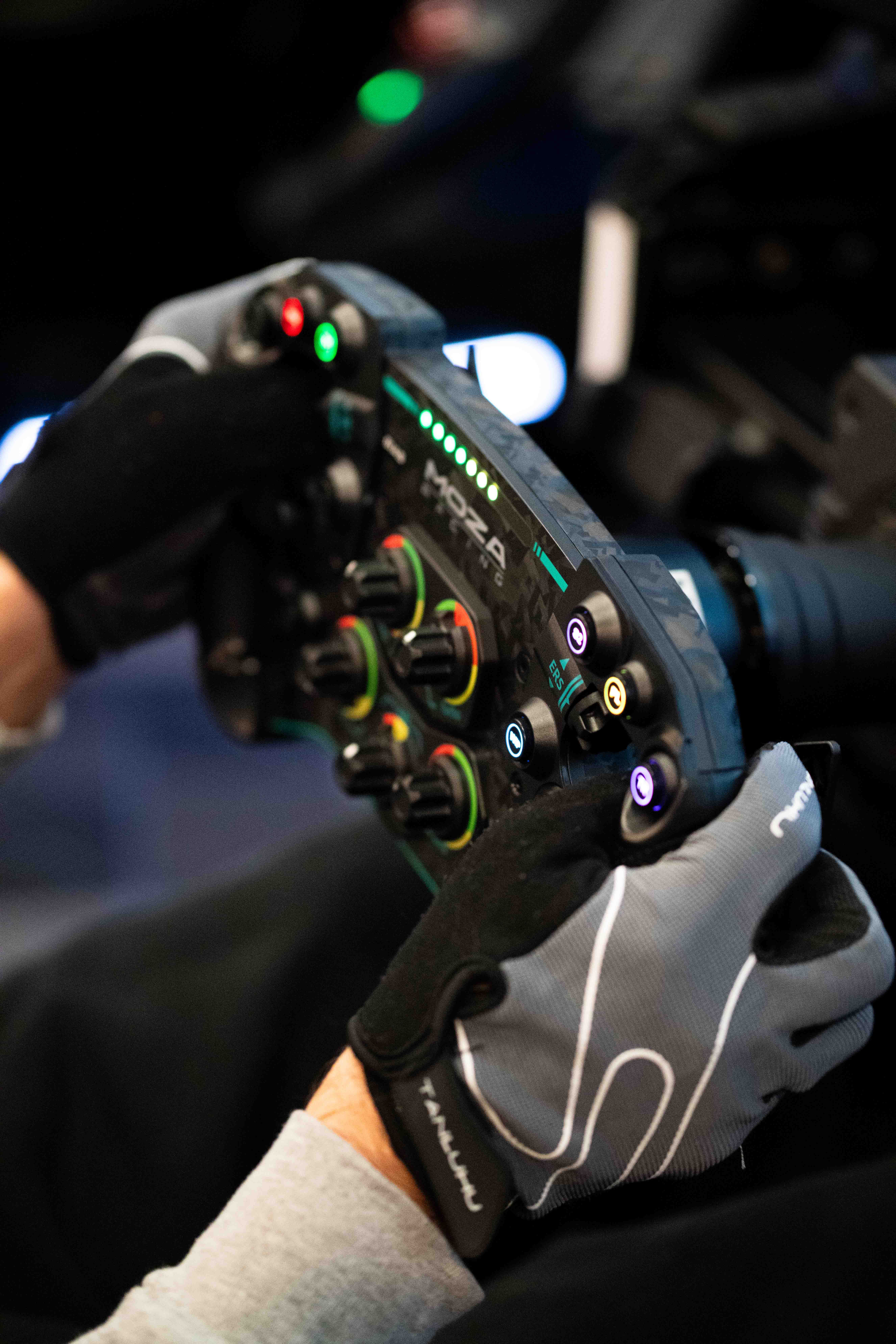
This is the part that changed how I look at it entirely, because I didn’t have to guess whether any of this mattered. I got to watch it play out in real time with my own kids, all coming at it from different places. With my son, I saw the frustration early on, the quick reactions when something didn’t go right, and then over time, I saw that change into something more controlled. He didn’t stop getting frustrated, but he stopped letting it dictate what happened next. He’d reset, try again, and make small adjustments without needing someone to step in and guide him through it.
With my daughter, the impact showed up differently. After spending time in the sim, she mentioned that while it’s not the same as driving her Malibu to and from school, it made her more comfortable making quick decisions and more aware of what’s happening around her in the car. It wasn’t something I had pointed out or tried to connect for her. It was just something she noticed on her own, and hearing that made it clear that even in a different context, the experience was carrying over into something real.
Neither of them would describe it the same way if you asked them directly, and neither of them are thinking about it in terms of “skills” or “development.” But watching it from the outside, it’s hard not to see what’s actually happening. They’re learning how to focus because they have to. They’re learning how to deal with frustration because it shows up immediately. They’re learning how to make decisions without overthinking them because there isn’t time to do anything else. And maybe most importantly, they’re learning how to keep going after something doesn’t work the first time.
Why It Doesn’t Belong in the Same Category
That’s the part I didn’t expect when all of this started. It’s easy to assume that anything involving a screen is going to pull them further into distraction, or at the very least, not give much back. That’s been the pattern with most things, and it’s a fair assumption to make. This just doesn’t follow it. It demands something from them, but in a way that keeps them engaged instead of pushing them away. It rewards patience instead of shortcuts, and it makes effort visible in a way that’s hard to ignore.
My youngest isn’t there yet, but I already know what I’ll be watching for as he gets older. Not whether he’s fast, or whether he wins anything, but whether he leans into it the same way. Whether he sticks with it when it gets frustrating, and whether he starts figuring things out on his own. Because after seeing all three of them approach the same thing in different ways, it’s clear that the value isn’t in the racing itself.
It’s in what it asks of them once they’re in it, and what they take with them when they step away from it.
That’s a big part of why we’ve started putting more structure around it, especially for teens. Not just giving them time in the seat, but creating an environment where they can stay in it long enough to experience the frustration, the adjustments, and the progress that comes with it. It’s not about keeping them busy for a few hours, it’s about giving them something that actually asks more of them and gives something back in return. If you’re curious what that looks like, we’ve put together a Summer Teen Camp at Grid Lounge built around exactly that.